Decide by access path and ground condition
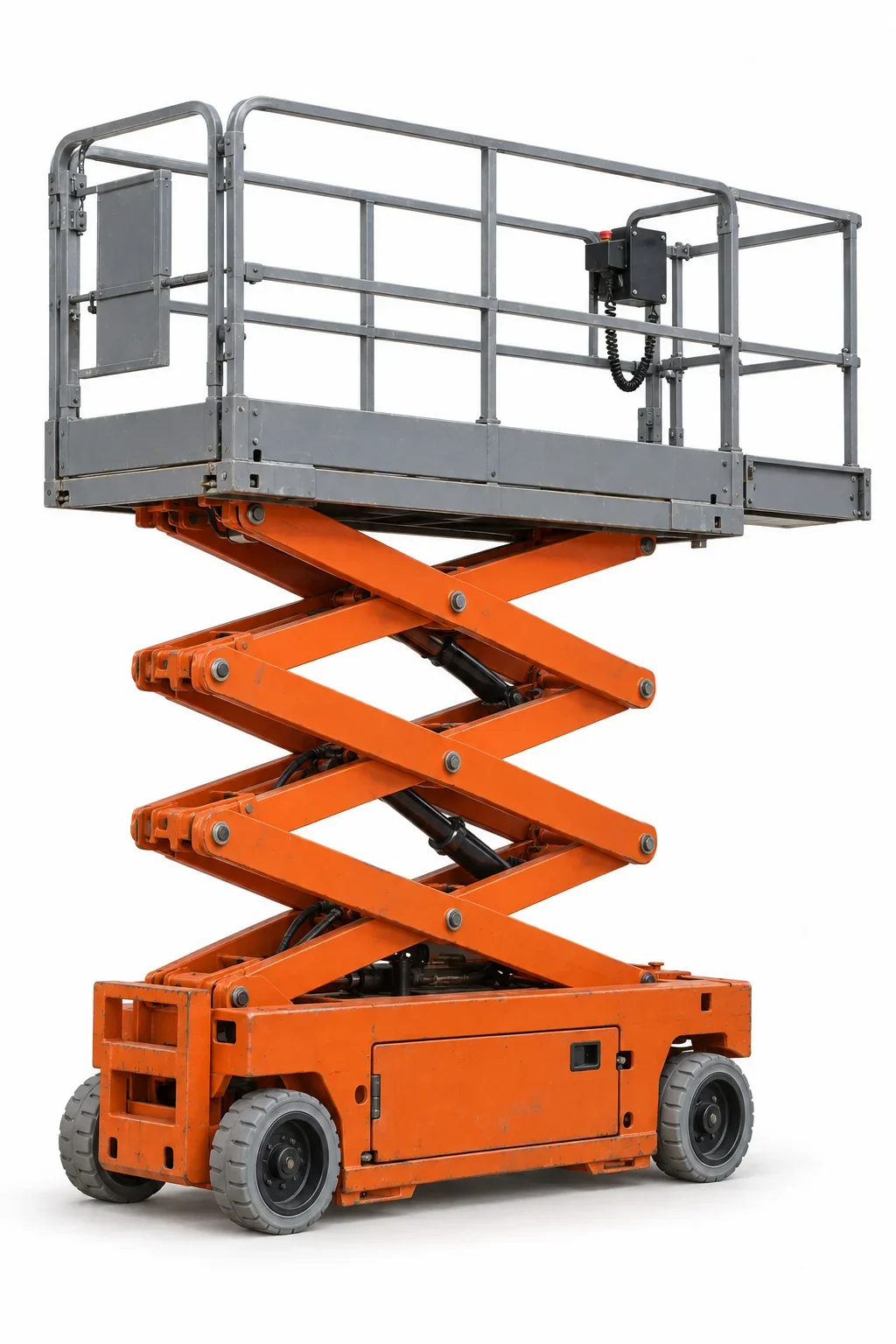
Rough-terrain scissor lifts make sense when the machine can sit under the work but must travel over ruts, compacted fill, or wet spots. Before sizing: - Confirm the narrowest gate, laydown aisle, or scaffolding gap that governs overall machine width. - Identify the firmest travel path from staging to the work face. Silty soils common in the area can pump under repeated loading after spring rains. - Determine platform height needed along long façades or canopy edges so repositioning stays efficient.
Local factors that influence selection
- Seasonal humidity and storms can leave the top few inches of soil soft even when the subgrade looks level. Larger tires and additional clearance help maintain mobility.
- Many regional projects mix slab work and yard work. Crews may stage materials outside and finish details inside, shifting between categories as surfaces change.
When a scissor isn’t enough
Scissors provide vertical reach but limited horizontal offset. If work points are set back from the edge by awnings, equipment, or landscaping features, compare: - Articulating booms for up-and-over geometry: /aerial-lift-rental/ and /boom-lift-rental/. - Telescopic booms for long, straight outreach along long walls or utility corridors: /boom-lift-rental/.
Pairing with material movement
Exterior tasks often need materials at height. For palletized loads or rough-grade placement, see /telehandler-rental/. For finished slab material handling near docks, see /forklift-rental/.
Actual exterior and elevated conditions, the selected unit’s instructions, and site procedures govern use. Account for soil bearing, slope transitions at curb cuts, and weather windows before finalizing a model.