Clear approaches and long reach
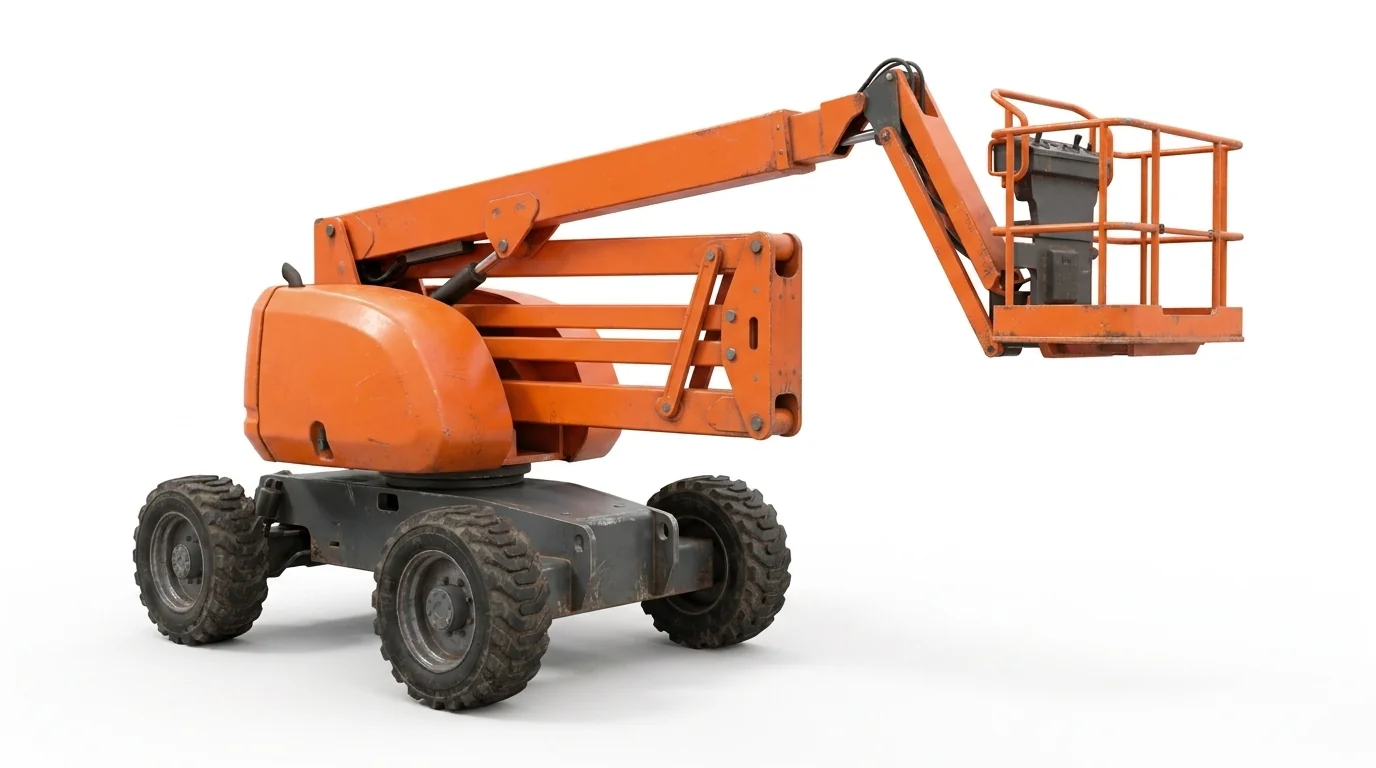
Straight booms excel on open sites: exterior steel, facade patching, signage, and lighting. With fewer articulation points, the platform tends to track more predictably as you extend. This matters when working along long elevations or above traffic lanes in large parking areas common around local distribution buildings.
Key inputs that narrow the selection: - Required horizontal reach from the machine’s parking line. - Maximum platform height and any under-ledge targets. - Setback zone width and turning radius for positioning. - Surface type along the travel path, including transitions from slab to compacted fill.
Evansville site and weather factors
Level geography can still hide soft areas, especially near drainage swales after seasonal rains. If the route or parking line lies on uncompacted or silty soils, rough-terrain configurations are often necessary. In summer heat, consider duty cycles for platform tools and any on-board systems; long, hot work windows can affect performance planning.
When a straight boom is not the best fit
If the work face is blocked by pipe racks, dock canopies, or mezzanines, an /articulating-boom-lift-rental/ may place the basket faster. For indoor, vertical-only tasks on slab, compare /electric-scissor-lift-rental/.
Positioning window and platform planning
Define the parking line relative to curbs, landscaping, or temporary fencing from /temporary-fencing-barricades-rental/. Note the needed platform capacity and tooling space. If the project spans multiple elevations along a facade, record the highest and farthest points to avoid undersizing the reach class.
Related categories
- Compare boom types: /boom-lift-rental/ and /aerial-lift-rental/
- Up-and-over work: /articulating-boom-lift-rental/
- Vertical slab work: /electric-scissor-lift-rental/
Actual conditions, the selected unit’s instructions, and site procedures govern elevated work. Confirm the approach line and ground support before settling on a size class.