Define the placement envelope
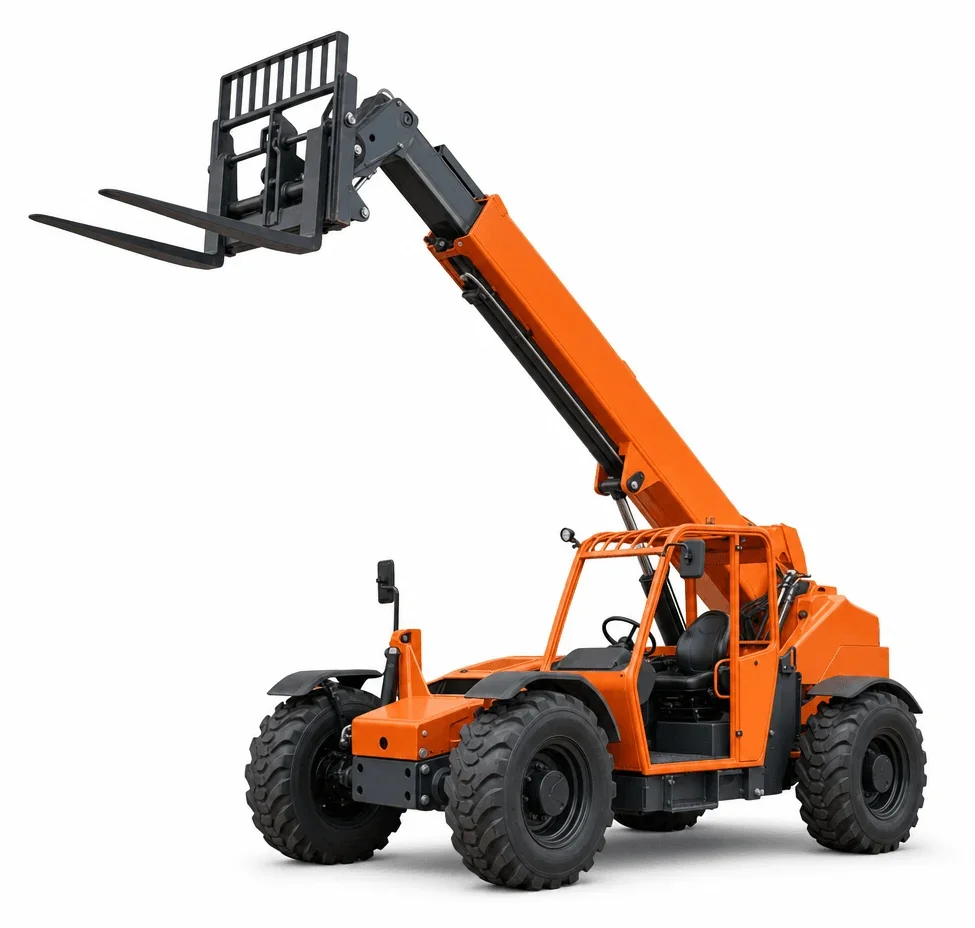
Start at the destination: where must the load land? Record the height of the landing point, horizontal offset from the machine, and available landing space. Then work backward to the staging area to confirm aisle widths, gate openings, and any grade changes. Longer booms provide reach, but stability at maximum extension depends on model capacity curves, which vary.
Evansville surface realities
Even though many sites look level, silty soils and jobsite fill can soften after spring rains. If your route includes unpaved areas, you may need a telehandler with rough-terrain capability and tires matched to mixed surfaces. On finished slabs in manufacturing expansions, tighter-turn models with lower overall height reduce conflicts with door headers and interior piping.
Load, attachment fit, and site logistics
Record pallet dimensions, total weight including packaging, and center of gravity. Note whether you must place beyond a parapet or set materials into a recessed bay. If the work shares space with temporary fencing, plan clear laydown zones; storage from /storage-containers-rental/ can streamline staging near active work.
Power, visibility, and workflow in the regional climate
Prolonged summer heat and humidity can influence crew scheduling and equipment cool-down windows. Visibility around large buildings and dock areas is another factor; long loads turning through busy yards need wider corridors and predictable paths to avoid bottlenecks.
Related categories
- For elevated access alongside placement tasks: /boom-lift-rental/
- For interior access once materials are staged: /electric-scissor-lift-rental/ or /vertical-mast-lift-rental/
Actual conditions, the selected unit’s instructions, and site procedures govern material handling and elevated placement. Confirm ground support and route geometry before deciding on a size class.